Tampilkan postingan dengan label Comprehensive Coverage. Tampilkan semua postingan

Kamis, 26 Mei 2011

My Tree, Their Vehicle... Whose Insurance (Repost from 10/23/09)

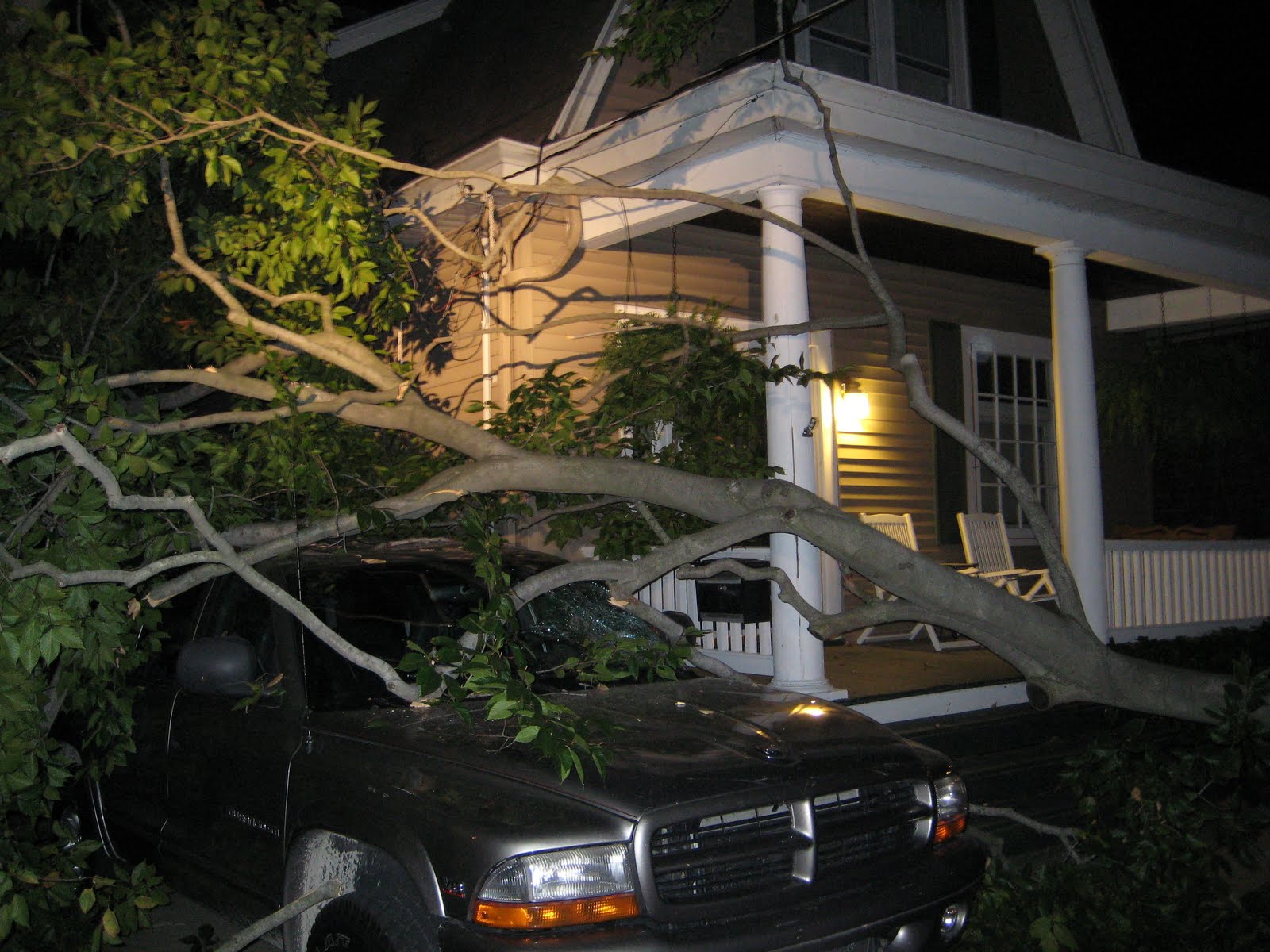
About a year ago I received a call from my neighbor. He sounded as if something was wrong; “Where are you” he asked? I informed him that I was away from home at the moment but was there something I could help him with. “Yeah, you can come get your huge tree limb off my SUV!” I immediately turned around and headed home. Once I got there I saw what is pictured here in this blog post. Because of heavy winds my huge front yard tree had dropped a limb and totally smashed the top of my neighbor’s vehicle. He and I spent the whole next day cutting away at the tree limb so that we could eventually tow his car to a body shop.

Now my neighbor lives next door to an insurance man so he was already well versed in whose insurance takes care of the damages to his SUV but for those of you that are not as privileged to live next to an insurance man I thought I would explain. Even though it was my tree that caused the damage my homeowner policy would not be involved in paying for the damages. In order for me to be responsible I would have to be negligent in some way but since it was an “act of God” (wind) negligence could not be pointed at me. Therefore, the coverage for the damage to his vehicle would fall under his personal auto policy. More specifically it would be his comprehensive or “other than collision” coverage. Since this coverage usually has a deductible (the amount the policy holder has to pay out of pocket before the insurance company takes care of the rest) I offered to help pay the amount he would have to pay out of pocket. I was not required to do this but since I like my neighbor and it was my tree, I felt it was the right thing to do.

There is, however, one situation that could have made the tree limb fall my fault. If for some reason my neighbor felt that my tree was unhealthy and dangerous he could compose a letter and “send receipt” a letter to me (meaning upon delivery I would have to sign a document stating I had received the letter). In the letter he would have to state that he felt my tree was in danger of falling and causing damage to his property. If that had been the case and my neighbor had sent me the letter he could have had grounds that I was negligent. This in turn would cause my homeowner policy to pay out for his damages and not his personal auto policy.

By the way, my tree is very healthy so there is no need for my neighbor to write a letter.

Kamis, 27 Januari 2011

Safewindshields.com

A cracked or broken windshield is a very common driving incident. It can happen at any time and anywhere. It could be a bouncing rock that was kicked up from another vehicle or a blown truck tire that crashes into the windshield. What is even more unfortunate is that it could happen whether you are in town or out of town traveling.

Since a cracked or broken windshield is so common you would think it would be no big deal when and where you get it fixed. However, if you think about it, a windshield is the one major piece of the car that helps to keep you inside a vehicle incase of a head on collision. This could be a matter of life and death and when you put it in that light it becomes a little bit more important to make sure you have the windshield fixed and fixed by the appropriate shops. Auto Glass Replacement Safety Standards Council (AGRSS) works to certify and set stand for glass repair companies. Their website www.safewindshields.com, is a very helpful tool when it comes to getting your vehicle windshield replaced, especially if you are out of town traveling. The top right part of the screen has a “Registered Shop Locator” where you can type in a zip code and find the accredited glass repair shops near your current location. This way, even when you are out of town, you can find a qualified glass repair shop to fix your windshield and know that it will be installed correctly and securely.


So next time you get a rock in the windshield be sure to visit the AGRSS website or call your friendly Fey Insurance Services agent to make sure you get a high quality glass repair shop.

Kamis, 09 Desember 2010

Auto Insurance Basics

States have laws requiring drivers to carry auto insurance, sometimes referred to as financial responsibility laws. There are a number of ways a driver can show his ability to pay for injuries and damages. By a wide margin, auto insurance is the most common form of financial responsibility compliances and is the most frequently purchased form of insurance.

The two basic components of auto insurance coverage are liability and physical damage coverages. Liability coverage will pay for your negligence resulting in bodily injury and or property damage. Claims for bodily injury could include claims for medical expenses, lost wages, consequential damages including pain and suffering. Property damage coverage pays for the damage you may do to the property of others. Liability coverage includes the cost of defending yourself against liability claims. A companion coverage that is of great value is uninsured motorist coverage. This coverage protects you if you are injured by an uninsured driver.


Physical damage coverage can provide collision and or comprehensive coverage. Collision coverage provides payment for damage to your automobile as the result of a collision with an object. Comprehensive coverage pays for the damage to your auto by causes other than collision. Collision and comprehensive coverages are optional and not required by law. If you have a lien on the automobile, the lender will require you carry these coverages.

Selasa, 16 Maret 2010

Here is a vidoe about the importance of taking care of small windshield cracks early.

Sabtu, 24 Oktober 2009

Cost Savings Ideas

There is constant talk today about cutting costs. Here are two options that might help you save a few dollars on your insurance in this rough economy.

1)Raise your deductibles:

A typical homeowner policy has a deductible of $500 and a typical auto insurance policy has $100 for comprehensive and $250 for collision deductibles. One way to help save a few dollars on your annual insurance bill is to increase your homeowner deductible to $1000 and your comprehensive and collision deductibles on your auto to $500 each. Note that when you do this you bring a little bit of the financial risk back on yourself. A good rule of thumb to help figure out if the deductible change is worth the risk is to take the savings you will get for increasing your deductible and multiply it by three. If that number is larger than the difference between your old deductible and your new deductible in my opinion you are taking on an appropriate amount of risk for the savings.

2) Drop physical damage on your old vehicles.

If a car is 10 years or older it is probably worth researching whether you should have comprehensive and collision coverage on your car (many people know this as "full coverage"). Two ways to help you decide if dropping comprehensive and or collision from your car is worth it are:
1. The Insurance Information Institute says that if your car is worth less than 10 times the amount you pay annually for comprehensive and collision coverage it isn't worth keeping the coverage.
2. Another way to analyze if it is worth keeping the coverage is to take the premium you pay for collision and add it to your deductible amount. That is the total amount that it costs you to insure your car. (i.e. Your annual collision premium is $250 and your collision deductible is $500. If you total your car you will have paid $750 ($250 in premium and $500 in deductible) before you received any money from your insurance company) If in your mind it isn't worth spending that kind of money to save your vehicle if it was totaled than you might want to consider dropping that coverage.

Jumat, 23 Oktober 2009

My Tree, Their Vehicle... Whose Insurance?


About a year ago I received a call from my neighbor. He sounded as if something was wrong; “Where are you” he asked? I informed him that I was away from home at the moment but was there something I could help him with. “Yeah, you can come get your huge tree limb off my SUV!” I immediately turned around and headed home. Once I got there I saw what is pictured here in this blog post. Because of heavy winds my huge front yard tree had dropped a limb and totally smashed the top of my neighbor’s vehicle. He and I spent the whole next day cutting away at the tree limb so that we could eventually tow his car to a body shop.

Now my neighbor lives next door to an insurance man so he was already well versed in whose insurance takes care of the damages to his SUV but for those of you that are not as privileged to live next to an insurance man I thought I would explain. Even though it was my tree that caused the damage my homeowner policy would not be involved in paying for the damages. In order for me to be responsible I would have to be negligent in some way but since it was an “act of God” (wind) negligence could not be pointed at me. Therefore, the coverage for the damage to his vehicle would fall under his personal auto policy. More specifically it would be his comprehensive or “other than collision” coverage. Since this coverage usually has a deductible (the amount the policy holder has to pay out of pocket before the insurance company takes care of the rest) I offered to help pay the amount he would have to pay out of pocket. I was not required to do this but since I like my neighbor and it was my tree, I felt it was the right thing to do.

There is, however, one situation that could have made the tree limb fall my fault. If for some reason my neighbor felt that my tree was unhealthy and dangerous he could compose a letter and “send receipt” a letter to me (meaning upon delivery I would have to sign a document stating I had received the letter). In the letter he would have to state that he felt my tree was in danger of falling and causing damage to his property. If that had been the case and my neighbor had sent me the letter he could have had grounds that I was negligent. This in turn would cause my homeowner policy to pay out for his damages and not his personal auto policy.

By the way, my tree is very healthy so there is no need for my neighbor to write a letter.